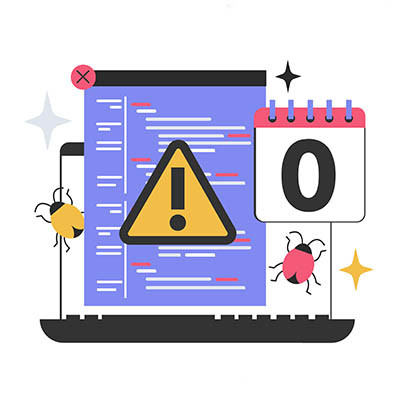
Let’s imagine that your business has a hidden back door—one that your building manager doesn’t even know exists—and that door leads straight into the heart of your office. By the time someone finds out that door exists, someone could have snuck in to wreak all kinds of havoc, unbeknownst to you. This is what is known as a zero-day threat; it’s a security vulnerability that is being actively exploited in the wild, one that was previously unknown to the vendor and unpatched against, and it’s a serious problem for any SMB.
Aspire Technical Blog
When considering the strengths of shapes, the triangle is generally considered the strongest, its three vertices creating the optimally stable configuration. The same can be said of your business’ approach to cybersecurity. The difference is that, instead of three equal legs working together to support whoever is seated on a stool, your business’ cybersecurity relies on equal investment in three key areas: your people, your processes, and your technology.
Let’s talk about how this holistic approach puts your business in the best position to stay secure, and where many organizations fall short.
Imagine leaving the physical doors of your business unlocked overnight. The thought is unsettling, isn't it? You wouldn't risk your assets, your hard work, and the trust of your clients like that. That's precisely the risk many small to medium-sized businesses (SMBs) unknowingly take by underestimating the importance of cybersecurity.
Let’s explore just how important proper cybersecurity truly is.
With remote workers, you have a lot more questions to consider on a daily basis, especially in the realms of productivity and security. If you’re not careful, you could put your business at risk. Here’s how you can face these challenges head-on and ensure your organization doesn’t suffer any negative side effects of remote work.
Have you ever thought about whether a hacker could secretly read your emails with your clients and coworkers? If you handle your own email system, it's really important to know about email encryption. Encryption helps keep your emails safe and private so you can focus on running your business without worrying about hackers.
Here are three big problems you could face if you don’t encrypt your emails:
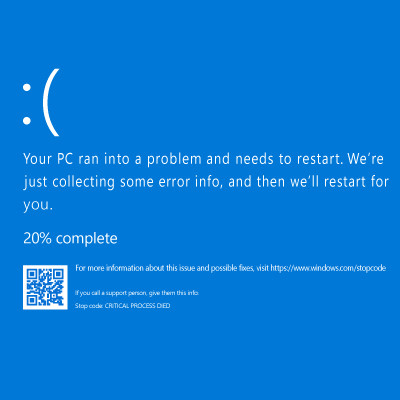
July 18th, 2024 saw one of the most widespread and devastating outages in recent memory, as a global update from cybersecurity company CrowdStrike brought about significant impacts to major infrastructures and societal needs. All this occurred even though only 1% of Windows operating systems experienced the issue.
Are you prioritizing your business’ network security? It’s remarkably important that any modern business focuses its efforts on this aspect of running a company. Still, it can be challenging to implement the right tools for the job—particularly if you are a future-minded business. You want to get the best return on your investment, which makes sense. Let’s help you get there.
Network security is complicated, and as such, you need to have considerable knowledge of it to ensure that your business is as secure as possible against the plethora of threats out there. Thankfully, you don’t have to do it alone. We want to give you some insight into the dos and don’ts of network security.
Email is complex, despite all appearances. It’s easy to overlook its complexities when you log into your account and it just works. However, you’ll need to ensure that your email is managed properly, as well as secured with protective measures for the underlying technology. Let’s go over some of the more effective methods you can use to keep your infrastructure secure from all types of threats, whether they are visible or hidden.